
《TAIPEI TIMES》 Lai vows to bolster defense, resilience
我們所做的一切,都是為了讓下一代不再經歷我們所經歷的。
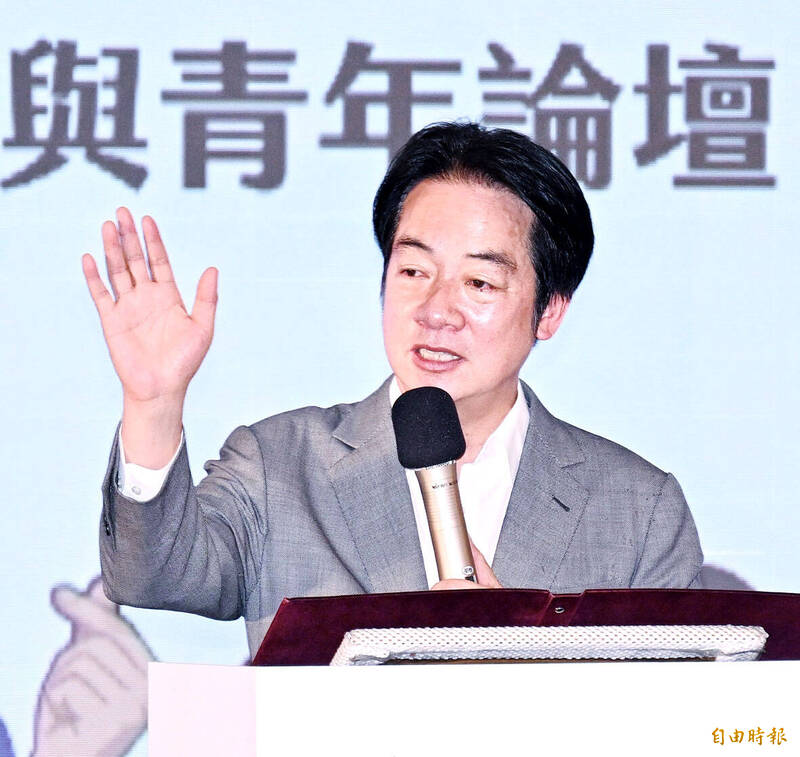
President William Lai speaks at a youth forum hosted by Business Today in Taipei yesterday. Photo: Fang Pin-chao, Taipei Times
STEPPING UP:Defense Minister Wellington Koo said Taiwan would do its part to uphold peace in the region, share deterrence responsibility and build up its defense capabilities
By Chen Cheng-yu / Staff reporter, with agencies President William Lai (賴清德) yesterday said Taiwan would bolster its defense capabilities and economic resilience in response to growing threats from China, emphasizing that the aim is to deter conflict through strength.
Lai made the remarks during a Presidential and Youth Forum organized by Business Today attended by high school and vocational students.
The president said his goal is to make the nation safer, adding that Taiwan faces China’s political pressure, military intimidation and internal infiltration through “united front” tactics.
Despite the significant challenges, Taiwan is bolstering its defense through special and annual budgets, pursuing foreign arms purchases, and developing its domestic defense industry to improve overall capabilities, Lai said.
Economic resilience must also be strengthened, he said, adding that the economy should not only grow, but also withstand shocks.
“We cannot put all our eggs in one basket,” Lai said.
Instead of relying heavily on China as before, Taiwan is now looking outward to the world, making the economy more resilient and growth more sustainable, he added.
Taiwan should stand shoulder to shoulder with other democracies and work together to bolster deterrence, using strength to help prevent conflict, Lai said.
If China is willing to engage with Taiwan on an equal and respectful basis, Taiwan is open to dialogue and cooperation in pursuit of peaceful cross-strait relations, he added.
However, Lai warned of China’s five main “united front” targets: to threaten Taiwan’s sovereignty; undermine Taiwanese national identity; recruit Taiwanese as spies; exploit public goodwill and use cross-strait exchanges as a channel for influence operations; and create so-called “integration zones” along China’s coast targeting Taiwanese businesses and young people.
The government has been reviewing responses to these threats, and will pursue legislative amendments and policy measures where needed, he added.
Separately yesterday, Minister of National Defense Wellington Koo (顧立雄) said Taiwan would work to uphold peace and stability in the Indo-Pacific region through strength, share deterrence responsibilities with regional partners, continue building up its self-defense capabilities and maintain close engagement with the US.
His remarks come after US Secretary of Defense Pete Hegseth at the Shangri-La Dialogue in Singapore underscored the need for allies to increase defense spending and saying: “We need partners, not protectorates.”
The US would prioritize working with “model allies” who are the “most capable, clear-eyed and ready to defend their national interests,” Hegseth said.
“For those who believe they can continue to free ride on the generosity of the American taxpayer, hear us now: Those days are over,” he said. “Allies who refuse to step up and carry their own weight for our collective defense will face a clear shift in how we do business.”
Additional reporting by Fang Wei-li 新聞來源:TAIPEI TIMES