China's hidden camps - BBC News
歷史的天平,總有一天會傾向公義。
China's hidden camps
What's happened to the vanished Uighurs of Xinjiang?
Detention in the desert
On 12 July 2015 a satellite swung over the rolling deserts and oasis cities of China's vast far west.
One of the images it captured that day just shows a patch of empty, untouched, ashen-grey sand.
It seems an unlikely place to start an investigation into one of the most pressing human rights concerns of our age.
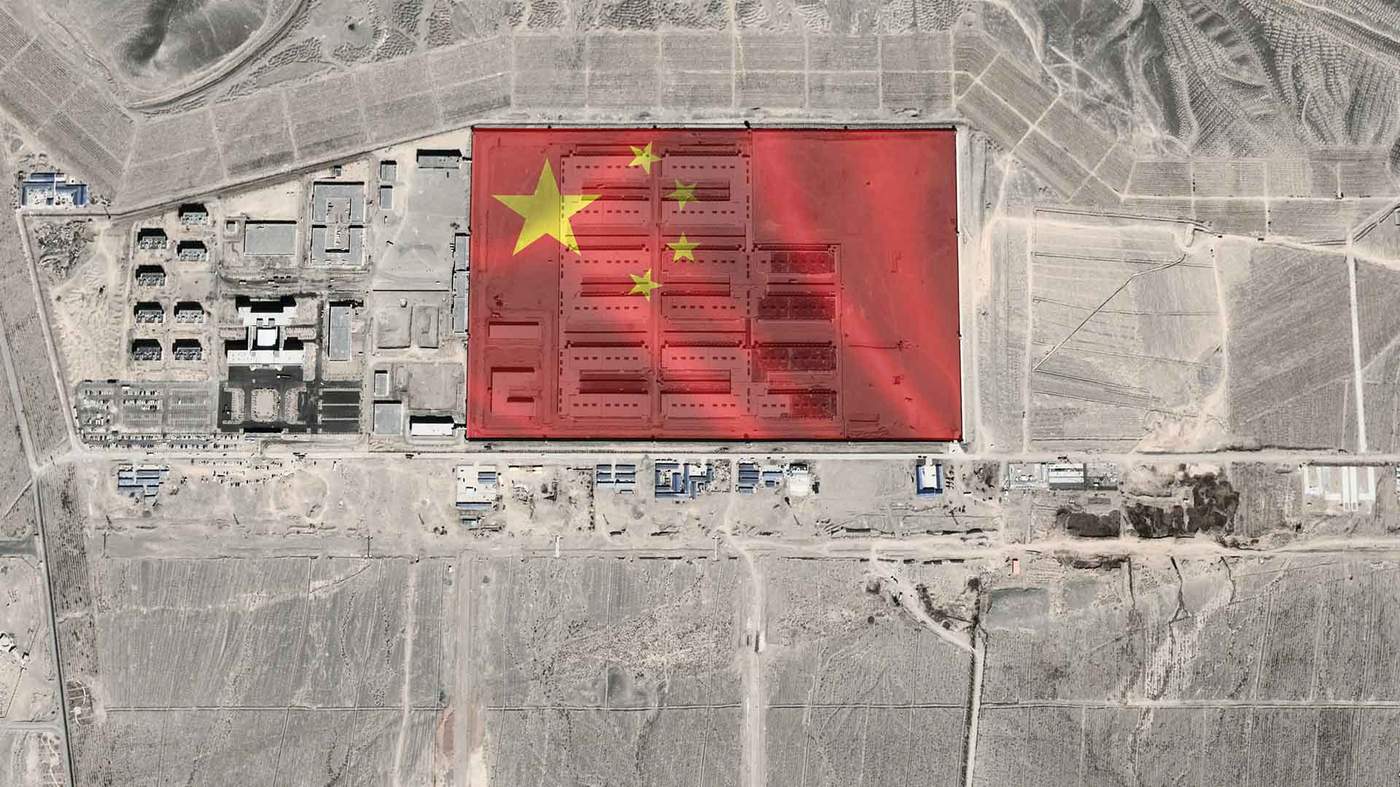
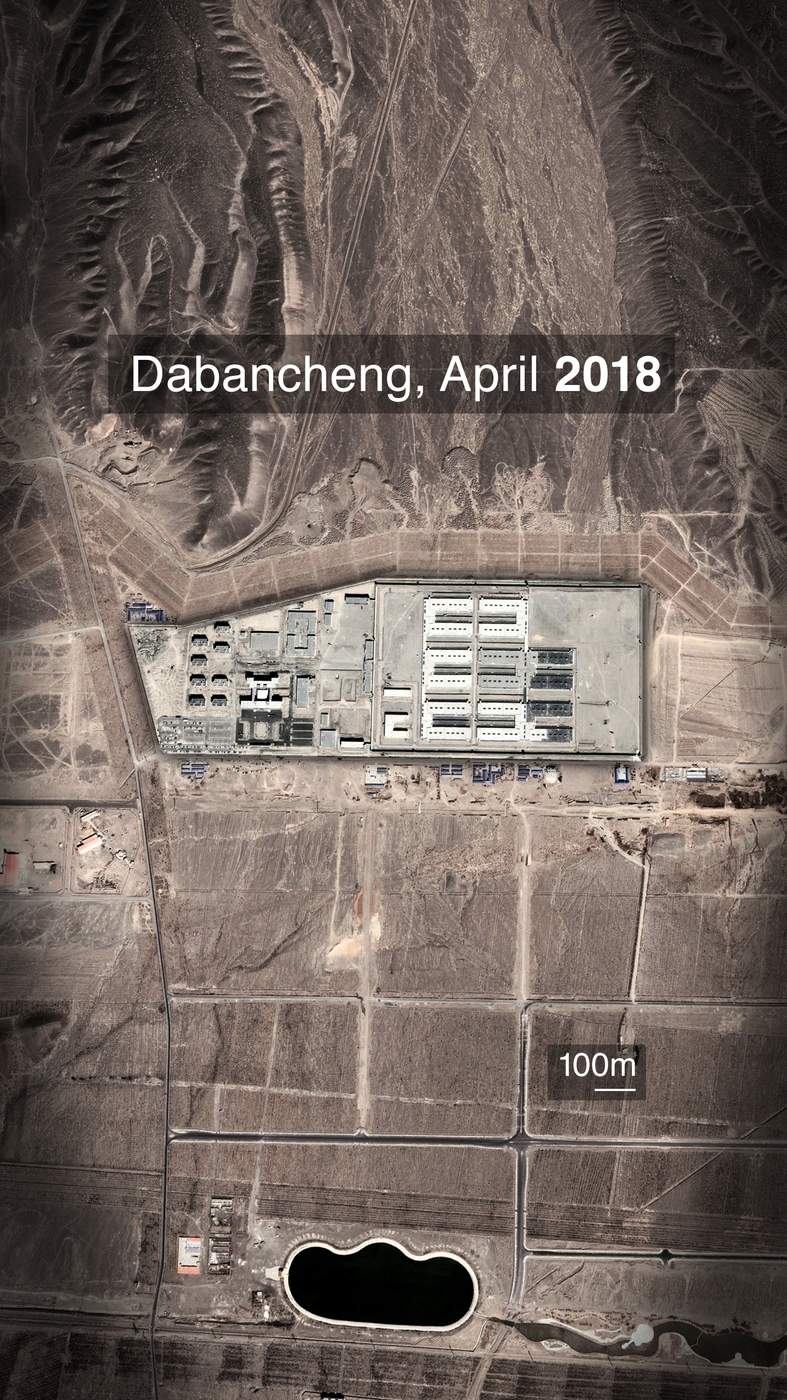
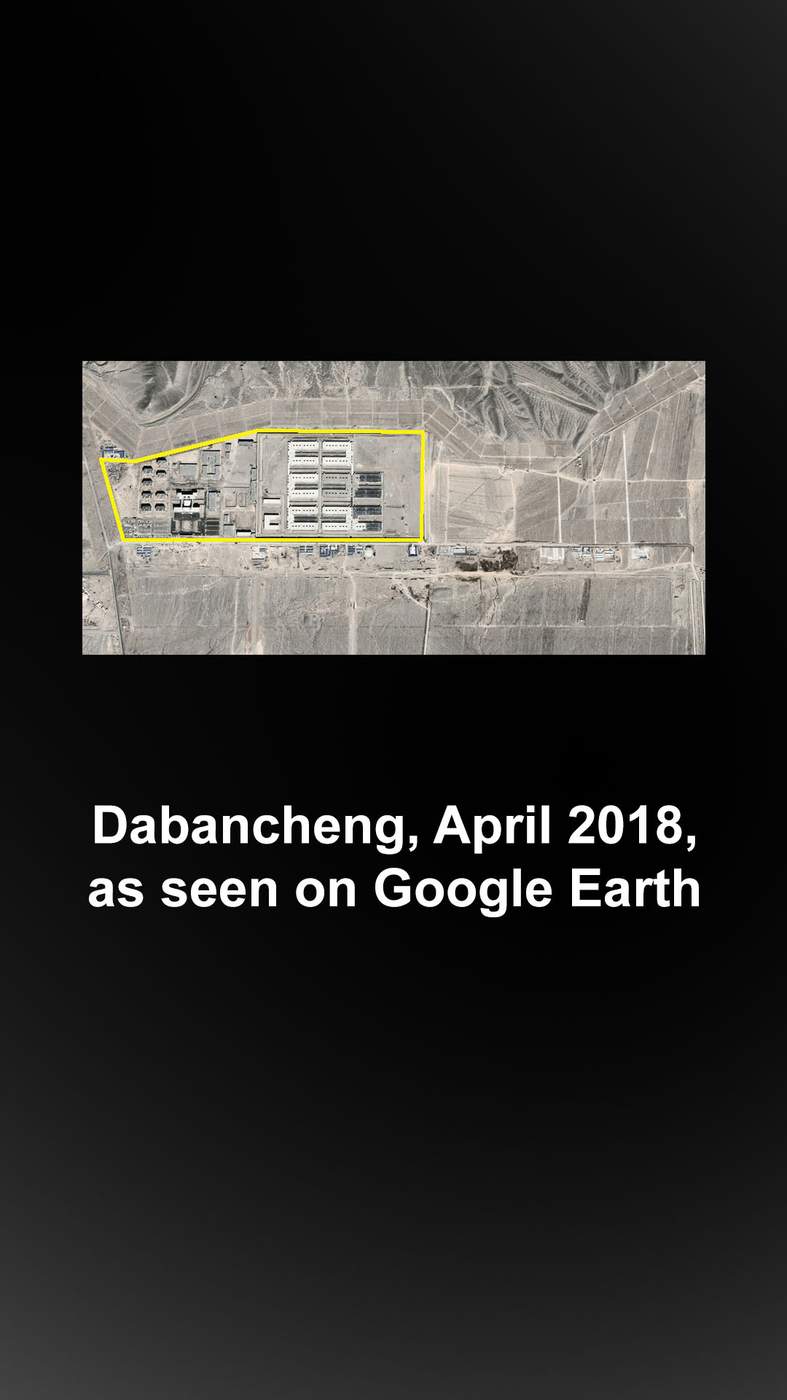
But less than three years later, on 22 April 2018, a satellite photo of that same piece of desert showed something new.
A massive, highly secure compound had materialised.
It is enclosed with a 2km-long exterior wall punctuated by 16 guard towers.
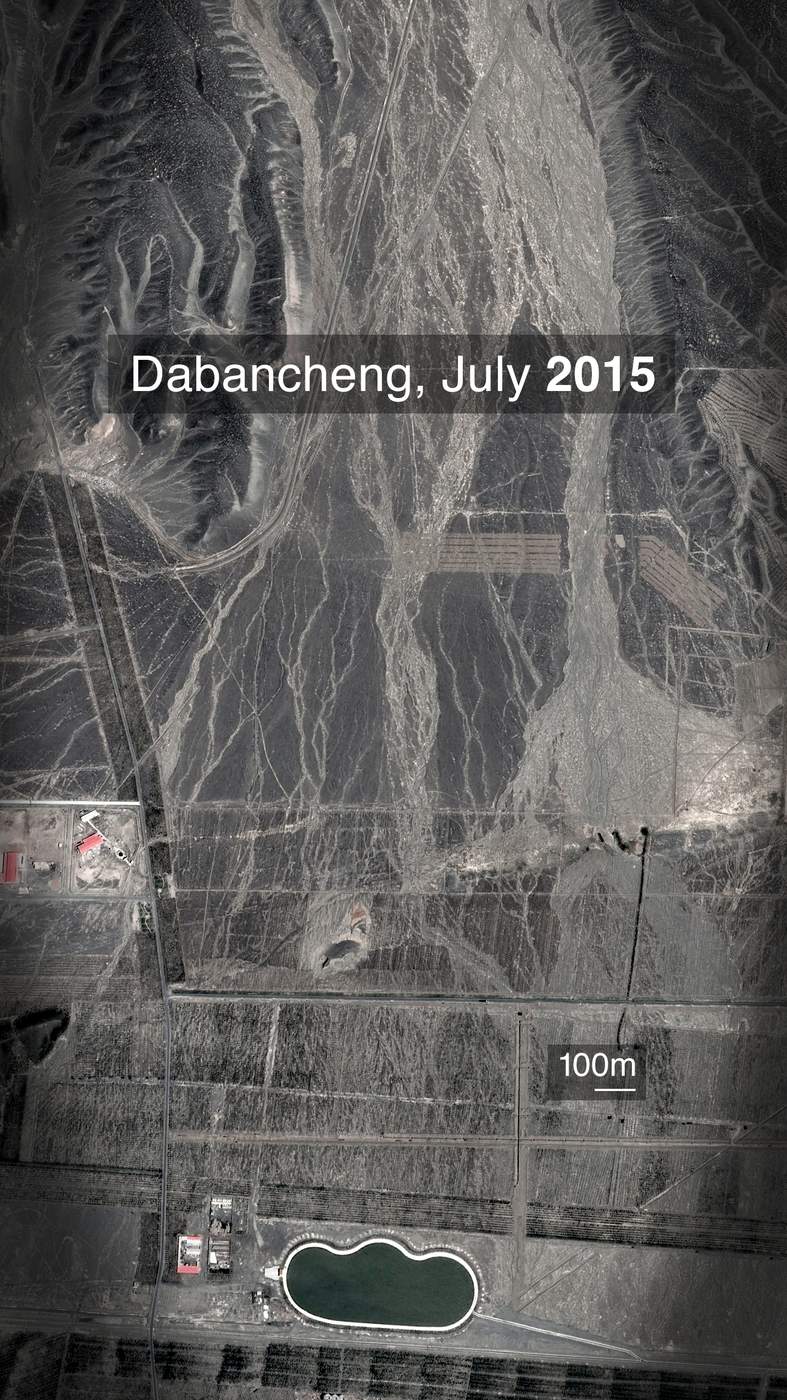
The first reports that China was operating a system of internment camps for Muslims in Xinjiang began to emerge last year.
The satellite photograph was discovered by researchers looking for evidence of that system on the global mapping software, Google Earth.
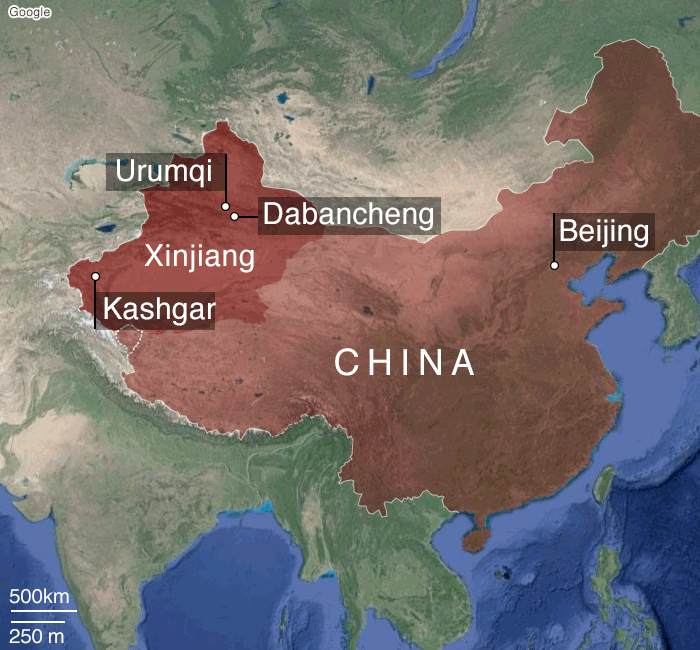
It places the site just outside the small town of Dabancheng, about an hour's drive from the provincial capital, Urumqi.
To try to avoid the suffocating police scrutiny that awaits every visiting journalist, we land at Urumqi airport in the early hours of the morning.
But by the time we arrive in Dabancheng we're being followed by at least five cars, containing an assortment of uniformed and plain-clothes police officers and government officials.
It's already clear that our plan to visit a dozen suspected camps over the course of the next few days is not going to be easy.
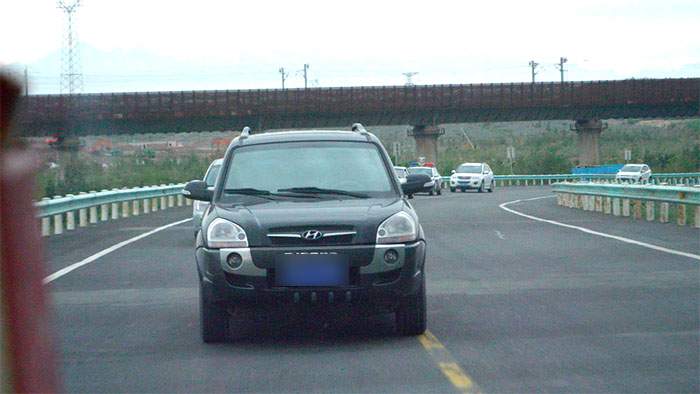
As we drive up the wide approach road we know that sooner or later the convoy behind is going to try to stop us.
While still a few hundred metres away, we see something unexpected.
The wide expanse of dusty ground, shown on the satellite image to the east of the site, is empty no more.
In its place, a huge extension project is taking shape.
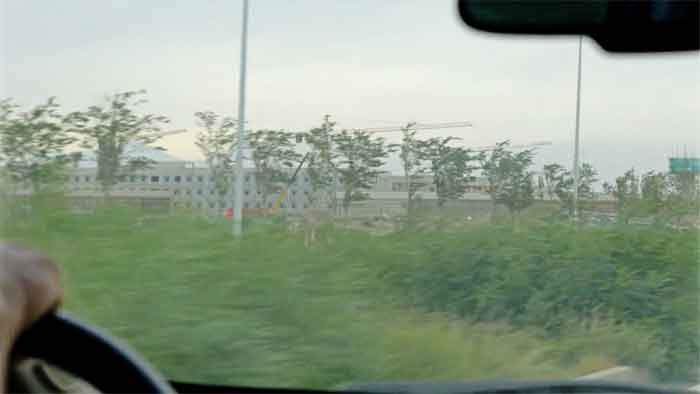
The site at Dabancheng seen from the road
Like a mini-city sprouting from the desert and bristling with cranes, are row upon row of giant, grey buildings - all of them four storeys high.
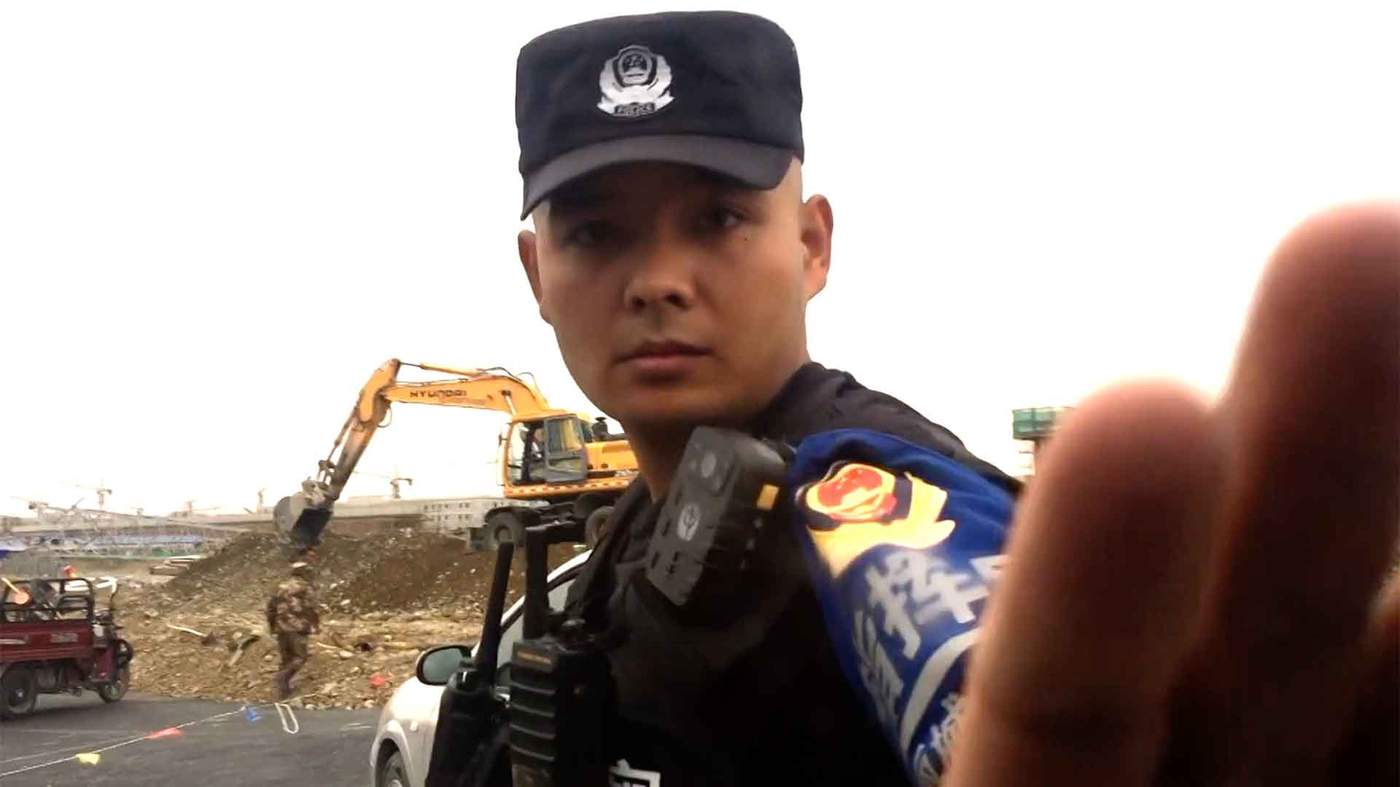
With our cameras rolling we try to capture the extent of the construction, but before we can go much further one of the police cars swings into action.
Our car is stopped - we're told to turn off the cameras and to leave.
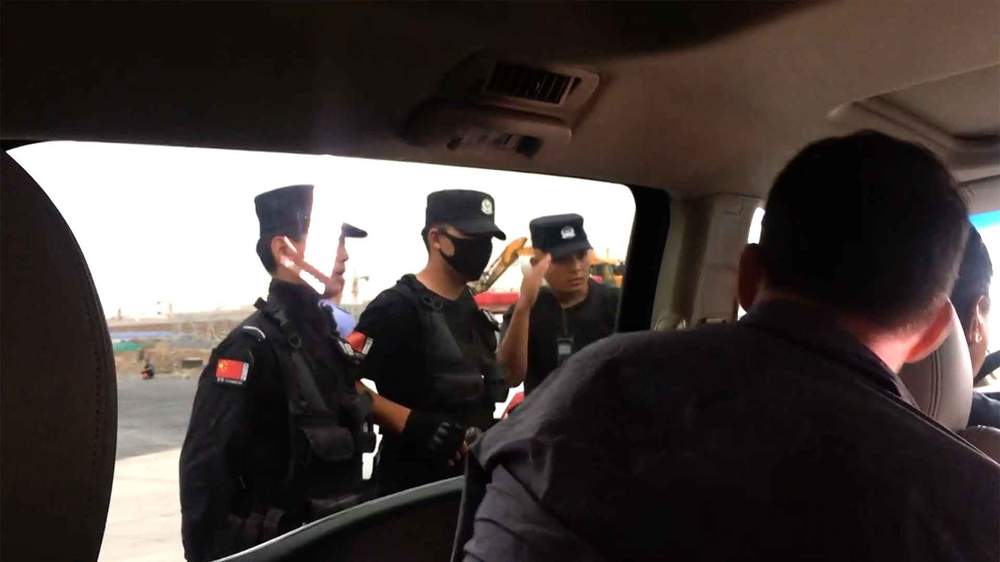
But we've discovered something of significance - a huge amount of extra activity that has so far gone unnoticed by the outside world.
In remote parts of the world, Google Earth images can take months or years to update.
Other public sources of satellite photography however - like the European Space Agency's Sentinel database - provide much more frequent images, although they're of a much lower resolution.
It is here that we find what we are looking for.
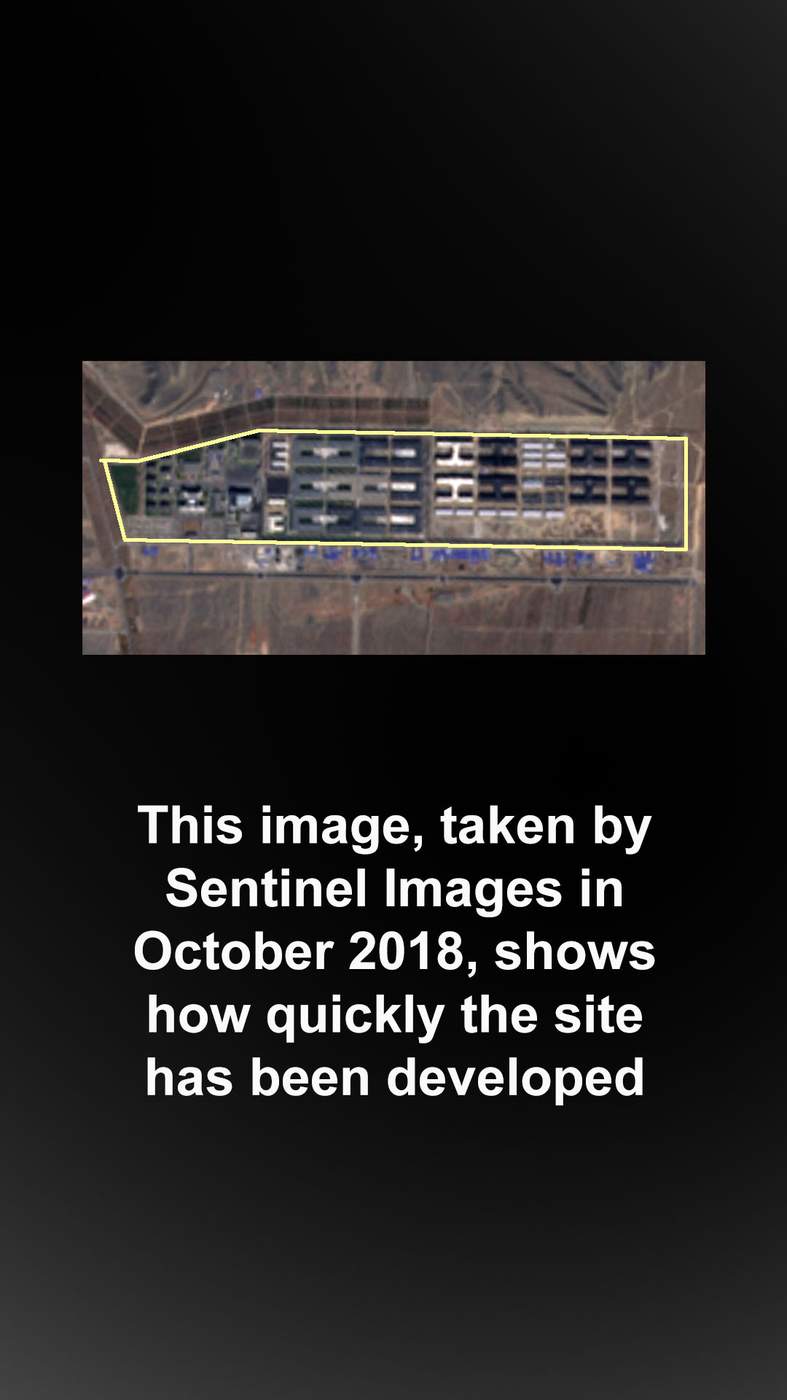
An October 2018 Sentinel image shows just how much the site has grown compared with what we'd expected to see.
What we suspected to be a big internment camp, now looks like an enormous one.
And it is just one of many similar, large prison-type structures that have been built across Xinjiang in the past few years.
Before our attempt to visit the site, we'd stopped in the centre of Dabancheng.
It was impossible to speak openly to anyone - minders lurked menacingly close by and would aggressively debrief anyone who even exchanged a greeting with us.
Instead, we telephoned random numbers in the town.
What was this large complex with its 16 watchtowers that the authorities were so desperate to stop us filming?
“It's a re-education school,” one hotelier told us.
“Yes, that's a re-education school,” another shopkeeper agreed.
“There are tens of thousands of people there now. They have some problems with their thoughts.”
This giant facility would of course fit no objective definition of a school.
In Xinjiang “going to school” has come to take on a meaning all of its own.
“I have deeply understood my mistakes”
A still from a Chinese state TV report on the Uighur “schools”
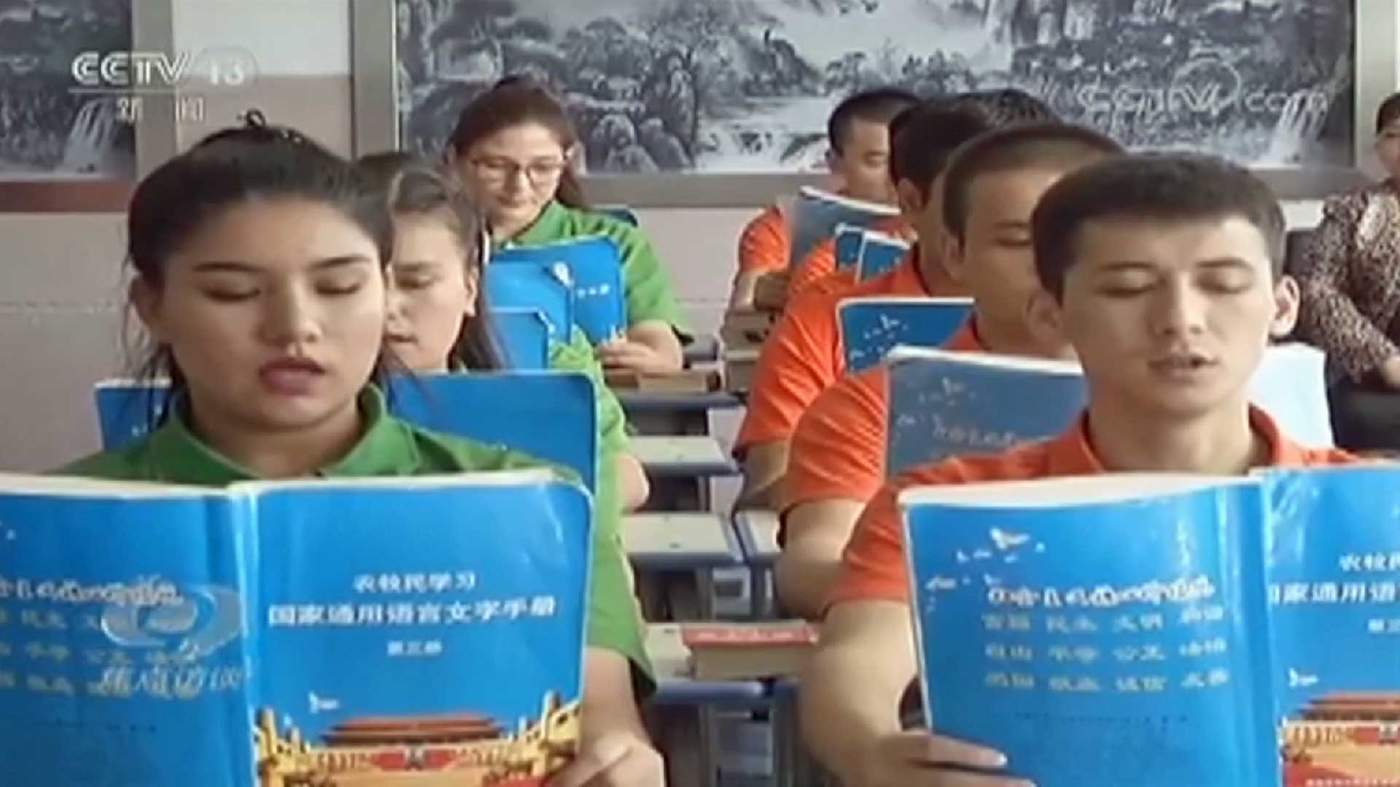
China has consistently denied that it is locking up Muslims without trial.
But a euphemism for the camps has long existed - education.
Almost certainly as a response to the mounting international criticism, the authorities have begun to double down on this description, with a full-on propaganda drive.
State-run TV has been showing glossy reports, full of clean classrooms and grateful students, apparently willingly submitting themselves to the coursework.
There is no mention of the grounds on which the students have been chosen for this “study” or how long the courses last.
But there are clues. The interviews sound more like confessions.
“I have deeply understood my own mistakes,” one man tells the camera, vowing to be a good citizen “after I get home”.
The main purpose of these facilities, we're told, is to combat extremism, through a mixture of legal theory, work skills and Chinese language training.
That last item shows that whatever you want to call them - schools or camps - the intended target is the same.
The facilities are exclusively for Xinjiang's Muslim minorities, many of whom do not speak Chinese as their mother tongue.
The video suggests the school is operating a dress code - not a single one of the female students is wearing a headscarf.
There are more than 10 million Uighurs in Xinjiang.
They speak a Turkic language and resemble the peoples of Central Asia at least as much as they do China's majority population, the Han Chinese.
The southern city of Kashgar, it is often pointed out, is geographically closer to Baghdad than it is to Beijing - and it sometimes feels culturally closer too.
And with a history of rebellion and resistance to Chinese rule, the relationship between the Uighurs and their modern-day political masters has long been as fraught as it is distant.
Before Communist rule, Xinjiang occasionally slipped from China's grip with brief periods of independence. Ever since, it has constantly tested that grip with sporadic outbreaks of protest and violence.
The mineral wealth - in particular oil and gas - of a region almost five times the size of Germany has brought huge levels of Chinese investment, rapid economic growth and large waves of Han Chinese settlers.
Resentment among Uighurs over the perceived uneven distribution of the proceeds of that growth has simmered.
In response to such criticisms, the Chinese authorities point to rising living standards for Xinjiang's residents.
But in the past decade or so, hundreds of lives have been lost to a mixture of riots, inter-community violence, premeditated attacks and the police response.
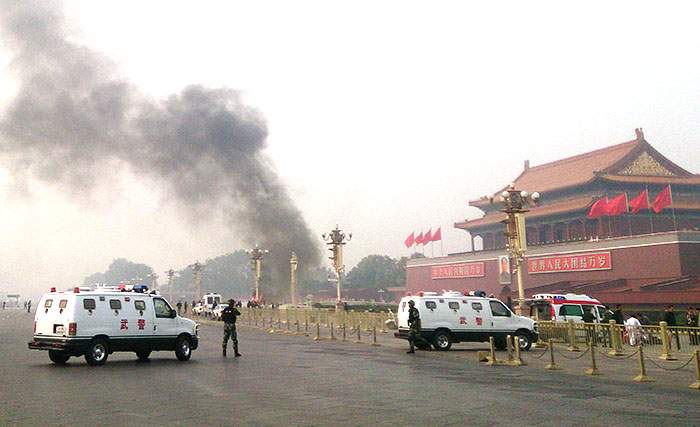
October 2013: Tiananmen Square sealed off after a car attack which killed two people
In 2013, an attack on pedestrians in Beijing's Tiananmen Square, which claimed two lives as well as the three Uighur occupants of the car, marked a significant moment.
Although relatively small in terms of fatalities it rattled the foundations of the Chinese state.
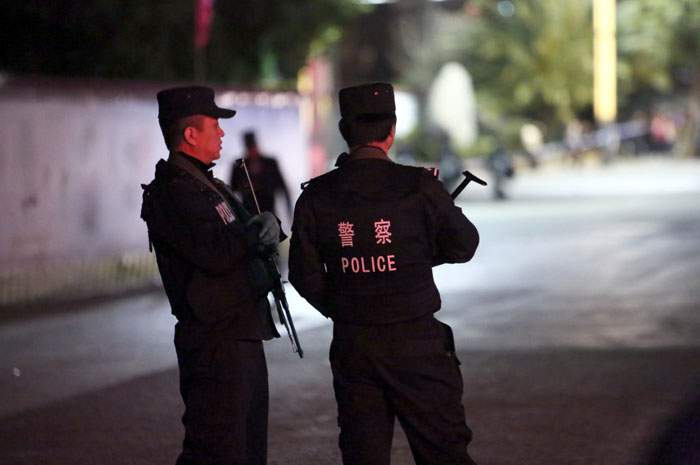
March 2014: Police in Kunming on patrol after the killing of 31 people
The following year, 31 people were slaughtered by knife-wielding Uighur attackers at a train station in the Chinese city of Kunming, more than 2000km away from Xinjiang.
Over the past four years, Xinjiang has been the target of some of the most restrictive and comprehensive security measures ever deployed by a state against its own people.
These include the large-scale use of technology - facial recognition cameras, monitoring devices that read the content of mobile phones and the mass collection of biometric data.
Harsh new legal penalties have been introduced to curtail Islamic identity and practice - banning, among other things, long beards and headscarves, the religious instruction of children, and even Islamic-sounding names.
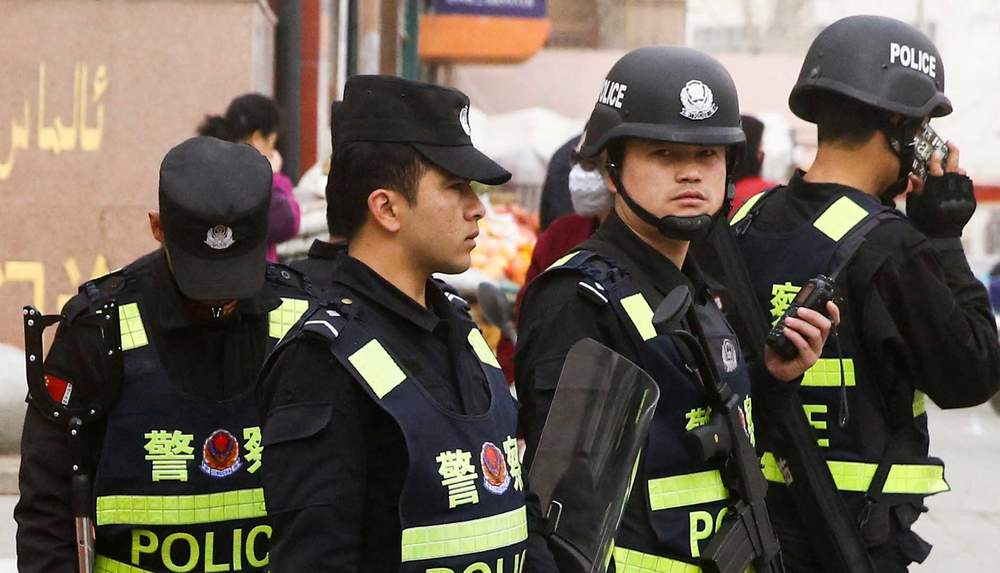
The policies appear to mark a fundamental shift in official thinking - separatism is no longer framed as a problem of a few isolated individuals, but as a problem inherent within Uighur culture and Islam in general.
It coincides with a tightening grip on society under President Xi Jinping, in which loyalties to family and faith must be subordinate to the only one that matters - loyalty to the Communist Party.
The Uighurs' unique identity makes them a target for suspicion.
That view has been reinforced by credible reports that hundreds have travelled to Syria to fight with various militant groups.
Uighurs are now subject to ethnic profiling at thousands of pedestrian and vehicle checkpoints while Han Chinese residents are often waved through.
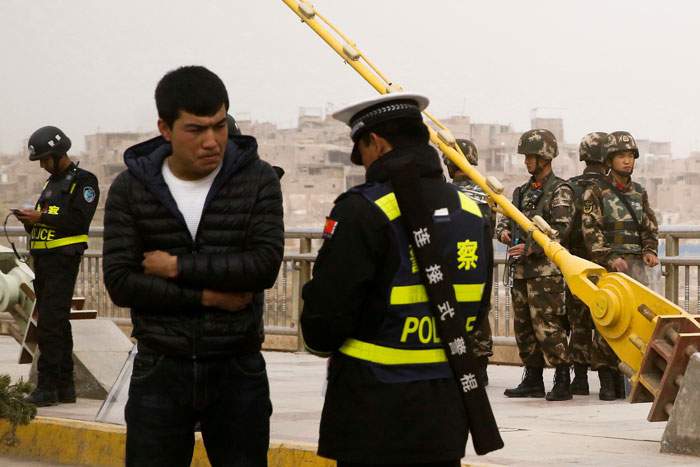
A police checkpoint in Kashgar, March 2017
They face severe travel restrictions, both within Xinjiang and beyond, with an edict forcing residents to surrender all passports to the police for “safe keeping”.
Uighur government officials are prohibited from practising Islam, from attending mosques or from fasting during Ramadan.
A Chinese flag flies above a closed mosque in the Xinjiang city of Kashgar
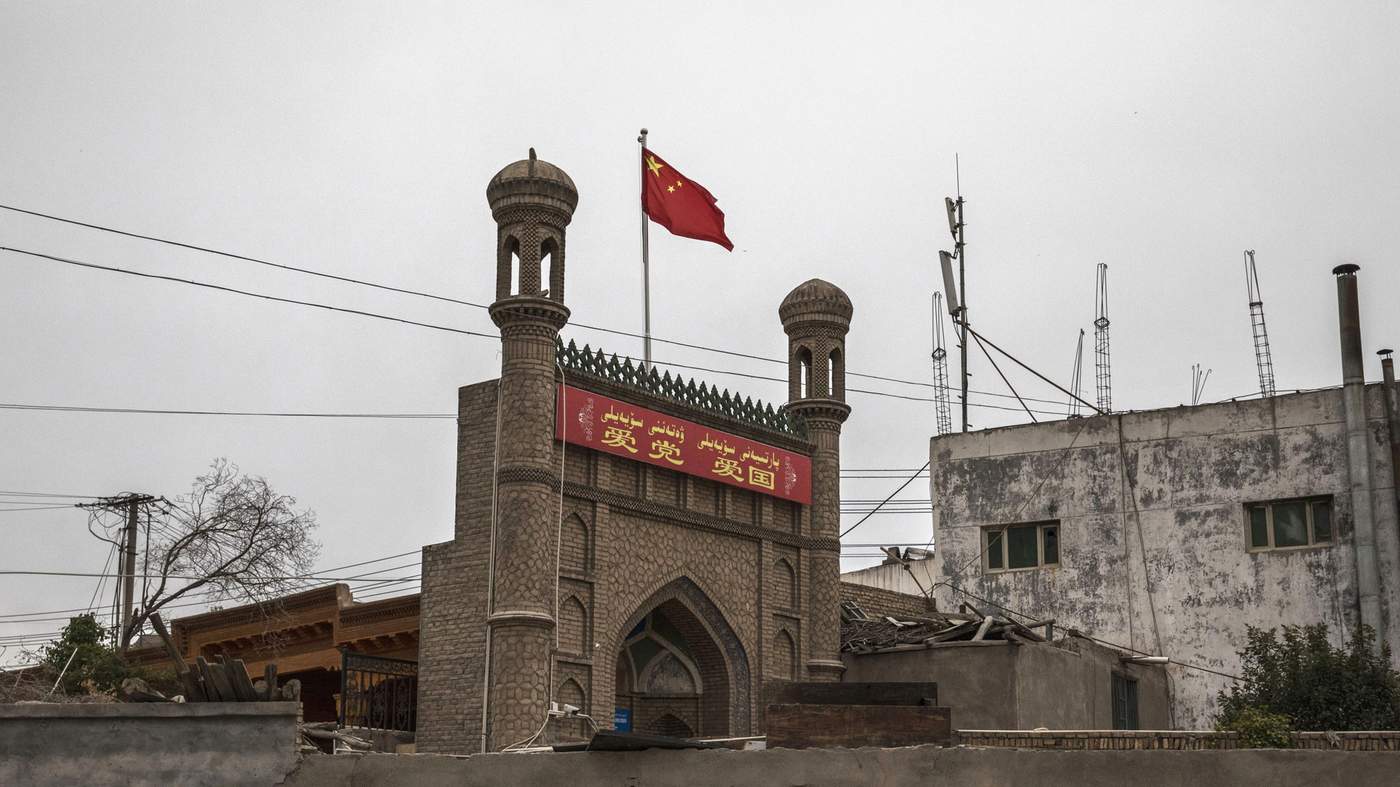
Given all this, it is perhaps not that surprising that China has introduced another older and blunter solution to the perceived disloyalty of many of its Uighur citizens.
Despite the government's denials, the most compelling evidence for the existence of the internment camps comes from a trove of information from the authorities themselves.
Pages of local government tendering documents inviting potential contractors and suppliers to bid for the building projects have been discovered online by the German-based academic, Adrian Zenz.
They provide details about the construction or conversion of dozens of separate facilities across Xinjiang.
In many cases the tenders call for the installation of comprehensive security features, such as watchtowers, razor wire, surveillance systems, and guardrooms.
Cross-referencing this information with other media sources, Zenz suggests that at least several hundred thousand and possibly over a million Uighurs and other Muslim minorities could have been interned for re-education.
The documents, of course, never refer to the facilities as internment camps, but as education centres, or in a more accurate translation, “re-education centres”.
One of them almost certainly relates to the giant site we visited - a July 2017 tender for the installation of a heating system in a “transformation through education school” somewhere in the district of Dabancheng.
In these euphemisms, and in the mundane measurements and quantities described, there is the unmistakable substance of a rapidly expanding network of mass confinement.
“They want to delete Uighur identity”
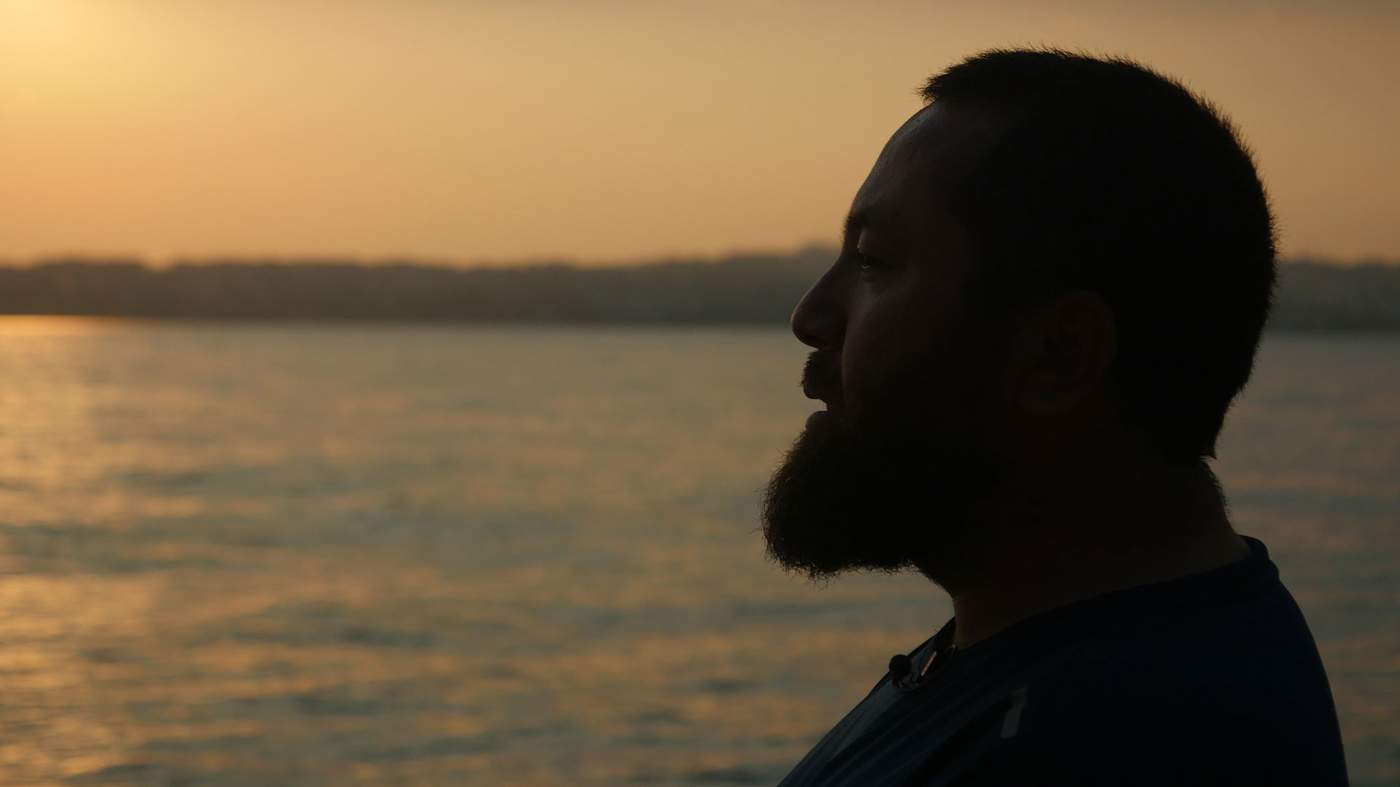
In 2002, Reyila Abulaiti travelled from Xinjiang to the UK to study.
She met and married a British man, took British citizenship and started a family.
Last year, her mother came for her usual summer visit, spending time with her daughter and grandson and doing a bit of London sightseeing.
Xiamuxinuer Pida, 66, is a well-educated former-engineer with a long service record at a Chinese state company.

Xiamuxinuer Pida
She flew back to Xinjiang on 2 June. Having not heard from her, Reyila called to check she'd got home OK.
The conversation was brief and terrifying. “She told me that the police were searching the house,” Reyila remembers.
It was Reyila who appeared to be the target of the investigation.
She needed to send copies of her documents, her mother said - proof of UK address, a copy of her British passport, her UK telephone numbers and information about her university course.
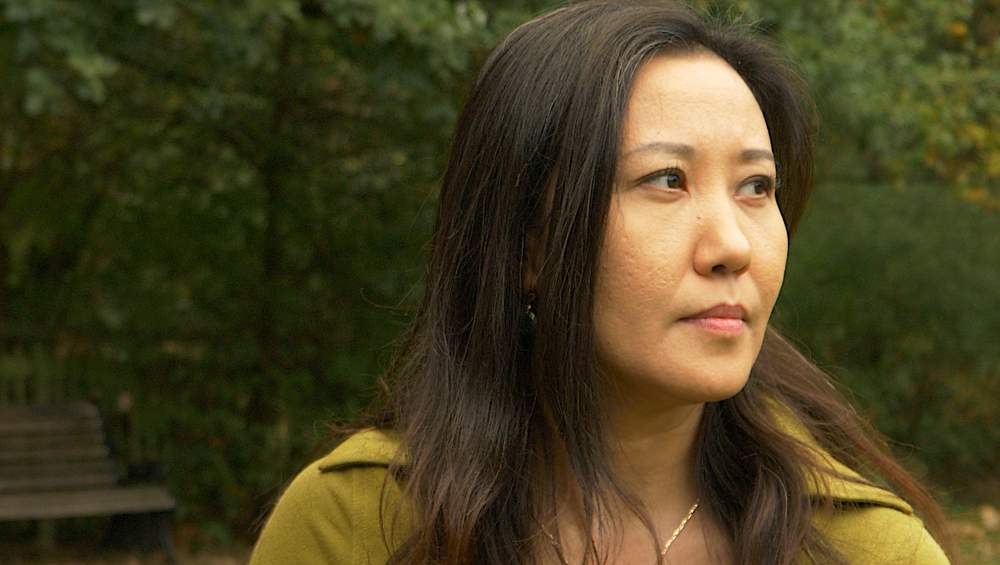
Reyila Abulaiti
And then, after asking her to send them via a Chinese mobile chat service, Xiamuxinuer said something that sent a chill down Reyila's spine.
“Don't call me again,” her mother told her. “Don't call me ever.”
It was the last time her daughter would hear her voice.
She believes she has been in a camp ever since. “My mum has been detained for no reason,” she says. “As far as I know, the Chinese government wants to delete Uighur identity from the world.”
The BBC has conducted lengthy interviews with eight Uighurs living overseas.
Their testimonies are remarkably consistent, providing evidence of the conditions and routines inside the camps and the broad basis on which people are detained.
Mainstream religious activity, the mildest dissent and any link with Uighurs living in foreign countries appear to be enough to sweep people into the system.
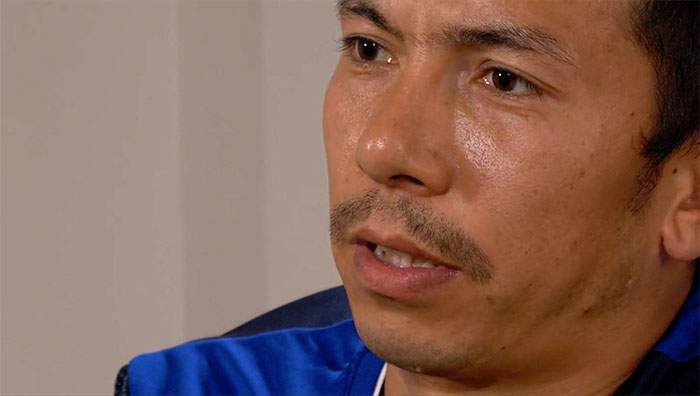
Ablet Tursun Tohti
Each morning, when 29-year-old Ablet Tursun Tohti was woken an hour before sunrise, he and his fellow detainees had one minute to get to the exercise yard.
After lining up, they were made to run. “There was a special room to punish those who didn't run fast enough,” Ablet says. “There were two men there, one to beat with a belt, the other just to kick.”
The exercise yard can clearly be seen on the satellite photo of the camp where he says he was held, in the oasis town of Hotan in southern Xinjiang.
“We sang the song called ‘Without the Communist Party There Can Be No New China,’” Ablet says.
“And they taught us laws. If you couldn't recite them in the correct way, you'd be beaten.”
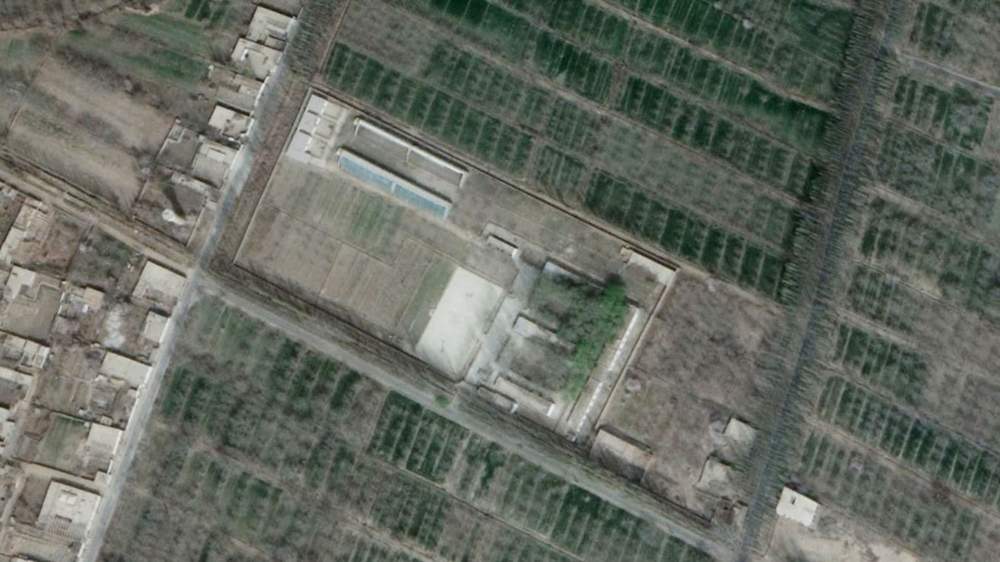
A 2018 satellite image showing a camp in Hotan where Ablet says he was detained
He was there for a month in late 2015 and, in some ways, he is one of the lucky ones.
In the early days of the internment camps, the lengths of the re-education “courses” appear to have been shorter.
Over the past two years there are very few reports of anyone being released at all.
And since there has now been a mass recall of passports, Ablet was one of the last Uighurs able to leave China.
He has sought refuge in Turkey, a country with a sizeable Uighur diaspora because of strong cultural and linguistic links.
Ablet tells me that his 74-year-old father and eight of his siblings are in the camps. “There is no-one left outside,” he says.
Abdusalam Muhemet, 41, is also now living in Turkey.
He was detained by the police in Xinjiang in 2014 for reciting an Islamic verse at a funeral.
They eventually decided not to charge him, he says, but he still wasn't free.
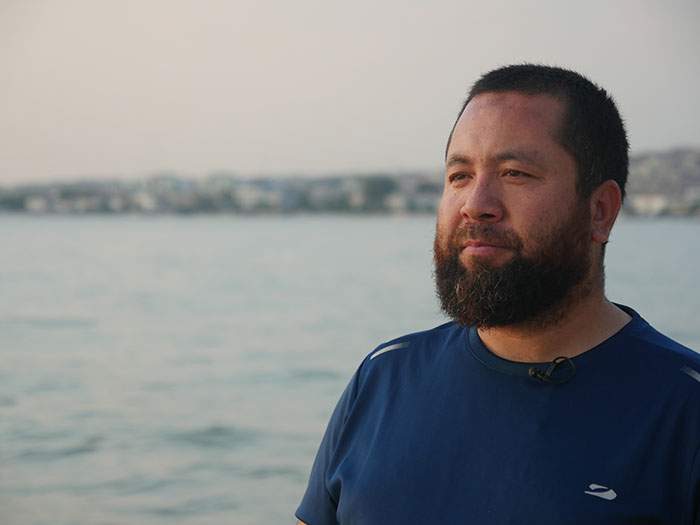
Abdusalam Muhemet
“They told me I needed to be educated,” he explains.
The facility he found himself in did not look like a school.
On the satellite photo, you can make out the guard towers and the double perimeter fencing of the Han'airike Legal Education Training Centre.
The rolls of razor wire can be identified from the shadows they cast under the harsh desert sun.
He describes the same routine of exercise, bullying and brainwashing.
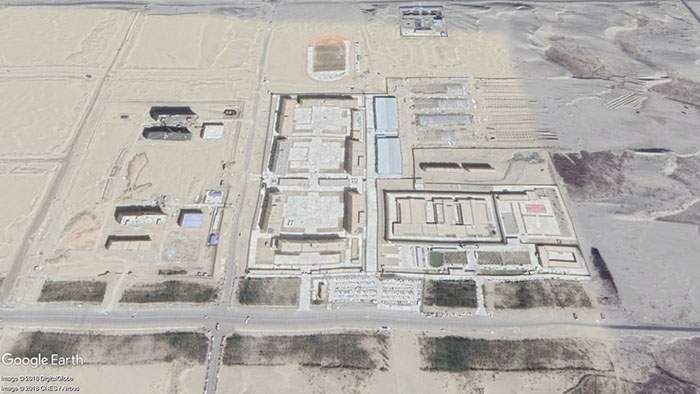
Satellite image of the site in Hotan where Abdusalam says he was held
Twenty-five-year-old Ali, not his real name, is one of those too scared to talk openly.
In 2015 he says he ended up in a camp after the police found a picture of woman wearing a niqab, a face veil, on his mobile phone.
“One old lady was there for having made a pilgrimage to Mecca,” he tells me, “and an old man for not paying his water bill on time.”
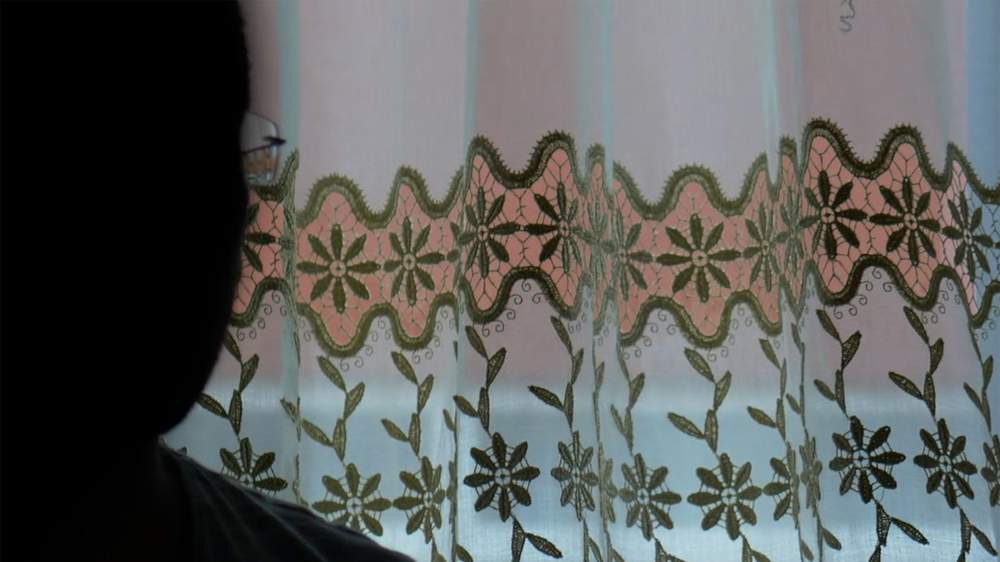
Ali (not his real name) is unwilling to be identified
During one of the forced exercise sessions an official’s car entered the camp and the gate was briefly left open.
“Suddenly, a small child ran in towards his mother who was running with us.
“She went towards her child, embraced him and started crying.
“Then a policeman grabbed the woman by her hair and dragged the small child out of the camp.”
In place of clean surroundings shown on state TV, a very different picture emerges.
“The doors of our dormitories were locked at night,” Ablet says. But there were no toilets inside, they just gave us a bowl.”
There is no way of independently verifying these accounts.
We asked the Chinese government about the allegations of abuse but have received no reply.
For Uighurs outside Xinjiang news has almost completely dried up.
Fear breeds silence. Reports of people being deleted from family chat groups, or told never to call again, are now commonplace.
Two of the things most central to Uighur culture - faith and family - are being systematically broken.
As a result of the detention of whole extended families, there are reports that many children are being placed in state orphanages.
Bilkiz Hibibullah arrived in Turkey in 2016 with five of her children.
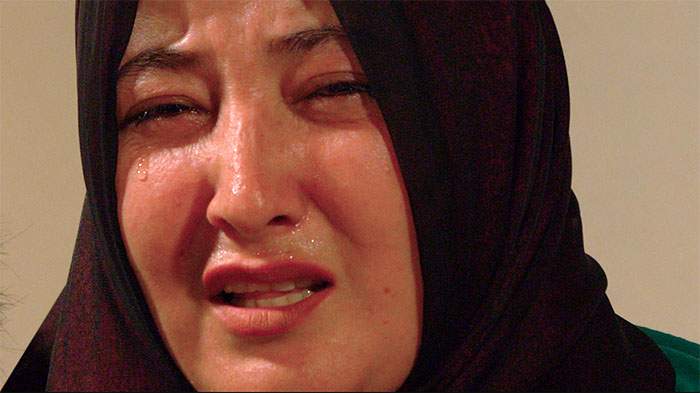
Bilkiz Hibibullah
Her youngest daughter, Sekine Hasan, who by now would be three and a half years old, stayed in Xinjiang with Bilkiz's husband.
She did not yet have a passport and the plan was that, when she got one, the family would reunite in Istanbul.
She never got that passport.

Bilkiz's daughter Sekine, whom she has not seen for more than two years
Bilkiz believes her husband was detained on 20 March last year.
She has since lost contact with the rest of her family and now has no idea where her daughter is.
“In the middle of the night, after my other children have gone to bed, I cry a lot,” she says.
“There is nothing more miserable than not knowing where your daughter is, if she is alive or dead.
“If she could hear me now, I'd say nothing but sorry.”
The view from above
Satellite image of site in Hotan enhanced by GMV
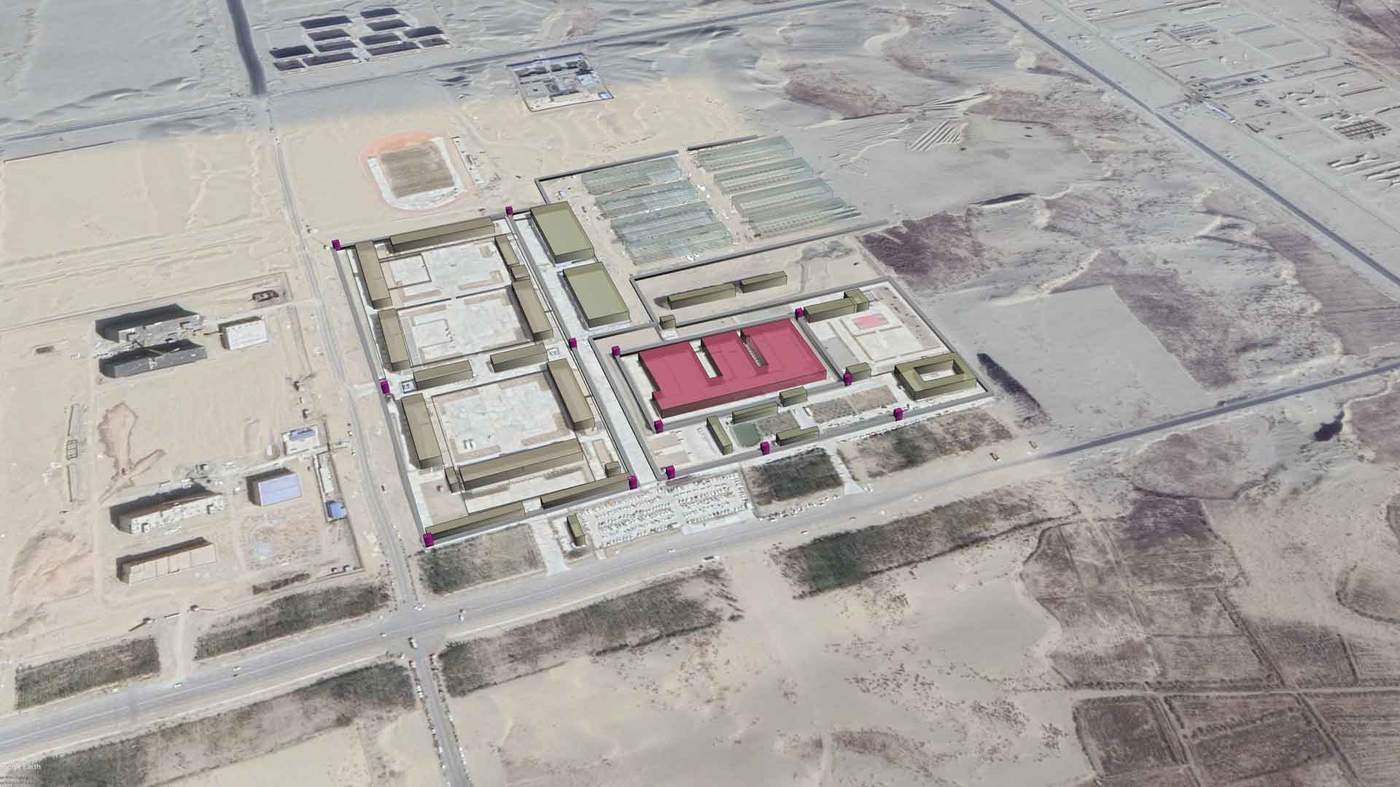
Using only publicly available, open-source satellite data, it's possible to shed light on Xinjiang's dark secret.
GMV is a multinational aerospace company with experience of monitoring infrastructure from space on behalf of organisations like the European Space Agency and the European Commission.
Their analysts went through a list of 101 facilities located across Xinjiang - drawn up from the various media reports and academic research about the re-education camp system.
One by one, they measured the growth of new sites and the expansion of existing ones.
They identified and compared common features such as watchtowers and security fencing - the kind of things needed to monitor and control the movement of people.
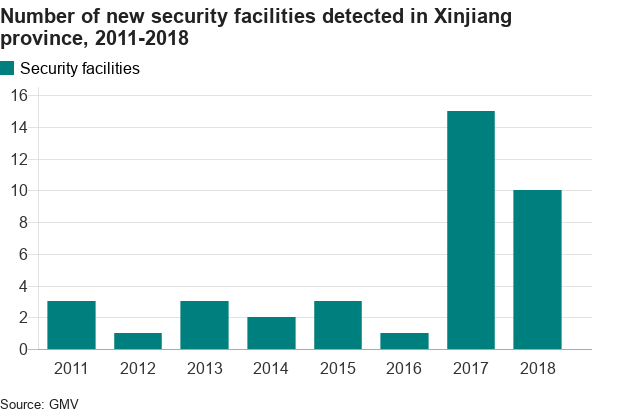
And they categorised the likelihood of each site actually being a security facility, placing 44 of them in the high or very high category.
Then they plotted the first detection by satellite of each of those 44 facilities over time.
Images show the extent of the building work that has taken place at part of the camp where Abdusalem Muhemet was held.
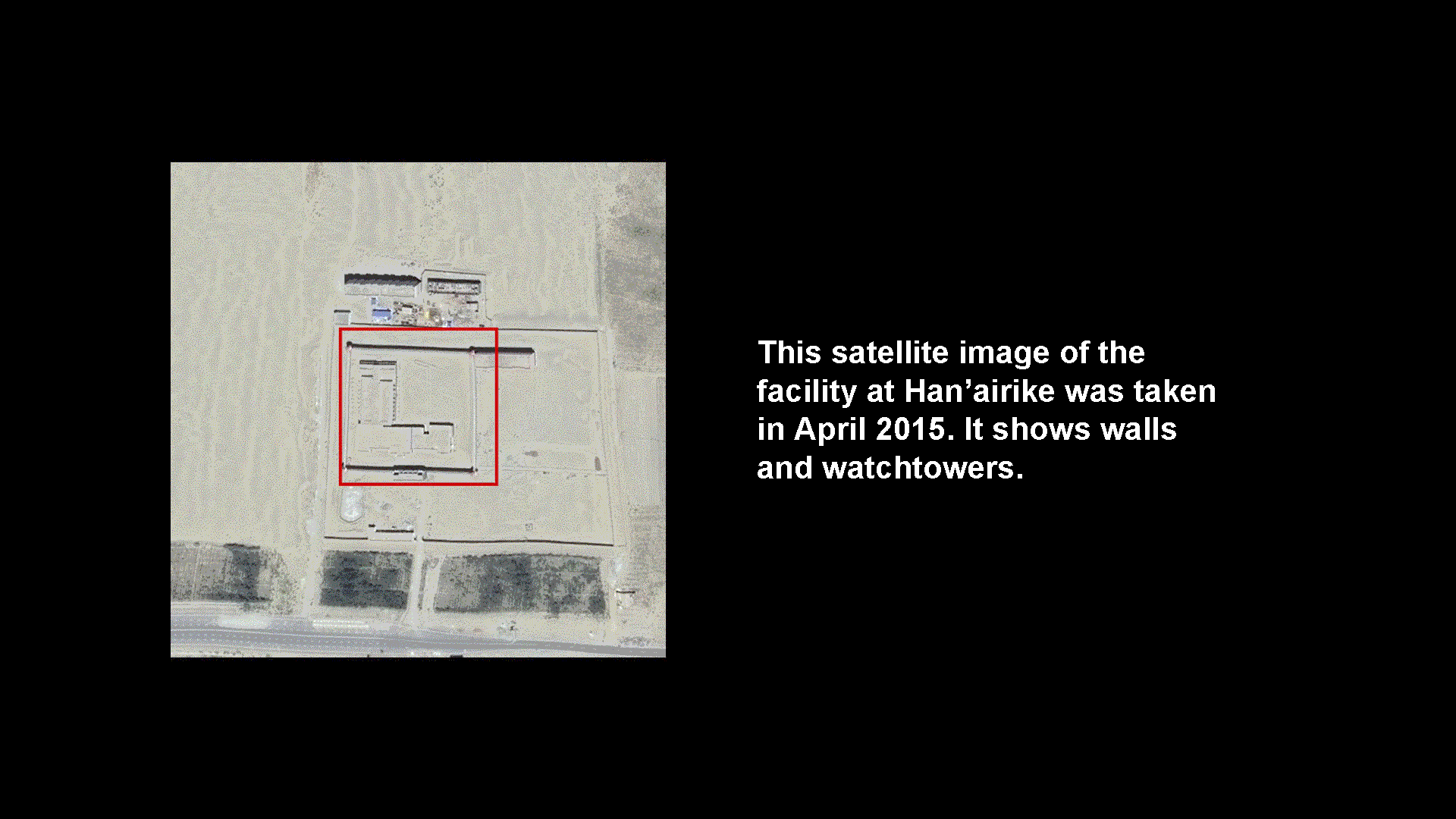
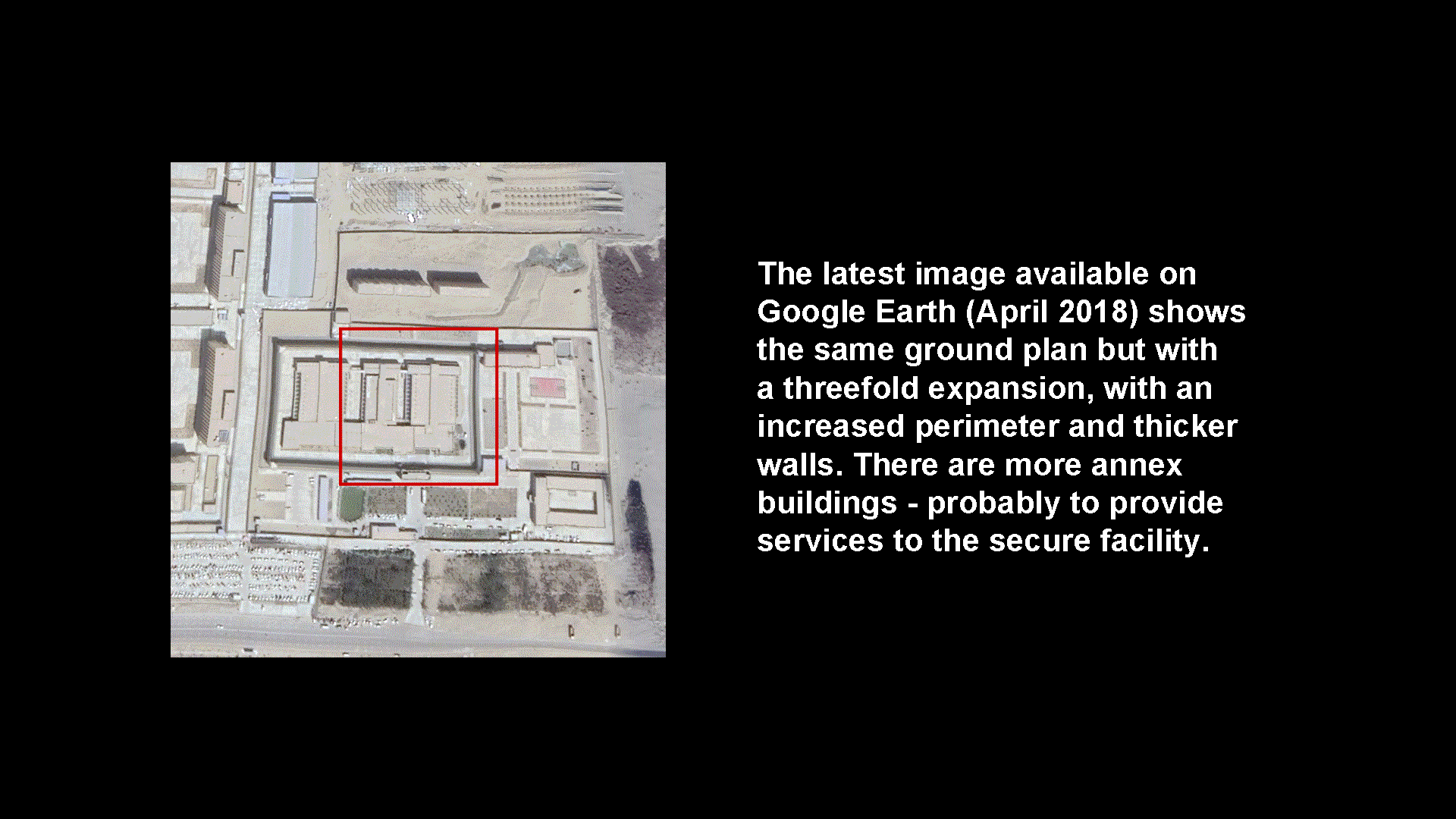
GMV cannot say what the sites are being used for. But it is clear that over the past few years China has been building a lot of new security facilities, at remarkable and increasing speed.
It is likely to be an underestimate of the true picture.
There is a striking conclusion - the recent trend is towards larger facilities.
The number of new construction projects this year has fallen when compared with 2017.