
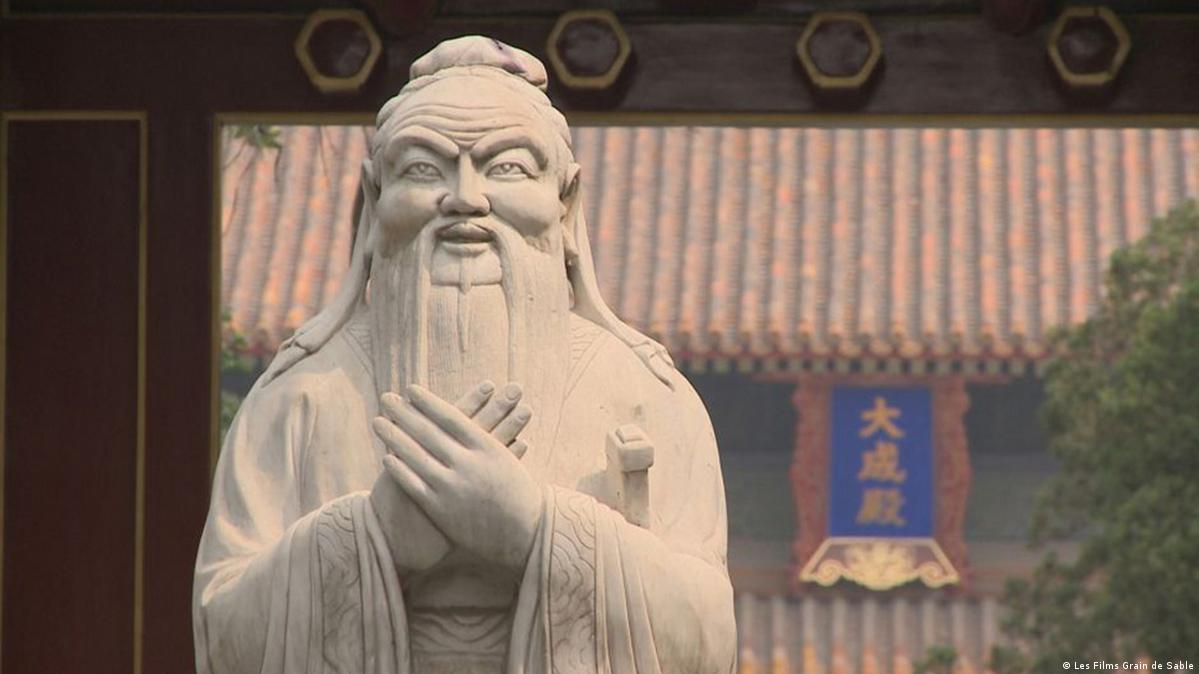
China: New Empire - China Awakens
每一個還在追問真相的人,都是民族的脊樑。
China went through a series of revolutions over the course of the 20thcentury. The country wanted to escape the powers of the West that had ensnared the country since the Opium Wars. On 1 October 1949, Mao Zedong (commonly referred to as Chairman Mao) founded the People’s Republic of China and declared it a communist state. But the republic's early years were overshadowed by the Korean War of the 1950s, in which a million Chinese soldiers perished.
The Great Leap Forward
In 1958 China launched the “Great Leap Forward” campaign. Mao wanted to use country's farming workforce to industrialize the country. But it was a disastrous move that eventually led to the Great Chinese Famine and the death of up to 45 million people. An emergency program was put into action when China hit its lowest point in 1961. Mao was marginalized and an economic model was developed by other party members that strongly went against Mao’s ideology. It appeared successful on the surface, but only served to further widen the gap between rich and poor.
Mao’s Cultural Revolution
From 1966 until his death in September 1976, Mao Zedong’s Cultural Revolution to cleanse society of capitalist behavior continued in various forms. Initially welcomed by the nation, the revolution slowly turned China into a nation of violence and persecution.
Broadcasting Hours: DW TUE 03.05.2016 – 19:15 UTC WED 04.05.2016 – 01:15 UTC WED 04.05.2016 – 15:15 UTC THU 05.05.2016 – 05:15 UTC SAT 07.05.2016 – 07:15 UTC MON 09.05.2016 – 03:15 UTC FR 20.05.2016 – 09:15 UTC Lagos UTC +1 | Cape Town UTC +2 | Nairobi UTC +3 Delhi UTC +5,5 | Bangkok UTC +7 | Hong Kong UTC +8 London UTC +1 | Berlin UTC +2 | Moscow UTC +3 San Francisco UTC -7 | Edmonton UTC -6 | New York UTC -4 DW (Amerika) WED 04.05.2016 – 09:15 UTC SAT 07.05.2016 – 07:15 UTC Vancouver UTC -7 | New York UTC -4 | Sao Paulo UTC -3