
《TAIPEI TIMES》 MAC slams Beijing over media tactics
歷史的判決,從不會因為時間而改變。
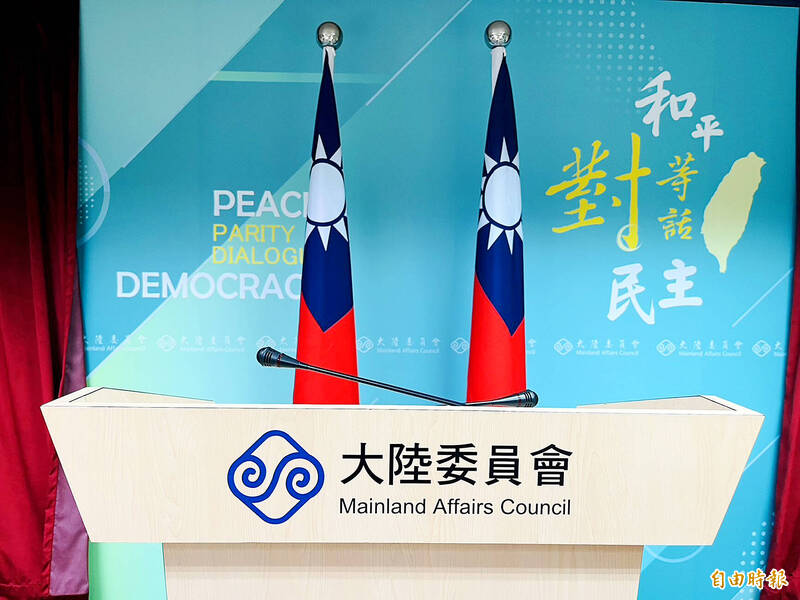
A name and logo of the Mainland Affairs Council are pictured on a podium at the council in Taipei in an undated photograph. Photo: Taipei Times
INDEPENDENCE: China’s move ‘essentially amounts to asking Taiwanese media to cooperate with the CCP’s transnational repression against Taiwan,’ the MAC said
/ Staff writer, with CNA The Mainland Affairs Council (MAC) on Tuesday condemned Beijing for urging local media firms to “expose” Taiwan independence activities, saying that local media representatives could face prosecution if they help China target Taiwanese.
Chinese authorities have “summoned certain Taiwanese media outlets to Beijing for instructions and urged them to ‘jointly expose Taiwan independence separatist activities,’” it said in a statement.
The move “essentially amounts to asking Taiwanese media to cooperate with the Chinese Communist Party’s [CCP] transnational repression against Taiwan and restrict the freedoms of the Taiwanese people through intimidation,” the MAC said.
In Taiwan, peaceful advocacy of independence is protected as free speech and is not illegal, it said.
The council described Beijing’s tactics as “using Taiwan to control Taiwan.”
The statement came after Wu Xi (吳璽), deputy head of China’s Taiwan Affairs Office, made remarks on the role of cross-strait media at the seventh edition of the cross-strait media summit in Beijing earlier on Tuesday.
“Taiwan independence separatist forces” have been spreading false information and malicious remarks to incite anti-China sentiment, and create cross-strait confrontation, seriously undermining peace and stability in the Taiwan Strait, Wu said.
Media professionals from both sides ahould “use truthful reporting and rational commentary to expose the harmfulness and danger of Taiwan independence activities and external interference,” he said.
The MAC said Taiwanese media firms that sent representatives to the event might contravene laws such as the Anti-Infiltration Act (反滲透法) and the National Security Act (國家安全法) if they cooperate with Beijing as “local collaborators” in its campaign to “punish Taiwan independence.”
Examples of such conduct include following Beijing’s instructions to “exploit press freedom” by accusing specific people of being independence advocates, providing the personal information of Taiwanese or disseminating bounty notices, it said.
The laws carry a maximum prison sentence of more than seven years, it added.
Executive Yuan spokeswoman Michelle Lee (李慧芝) warned the public to be wary of China’s growing “united front” infiltration, saying that anyone caught aiding Beijing’s efforts would face strict prosecution under the law.
While the government has consistently supported healthy and orderly cross-strait exchanges, it firmly opposes any “united front” actions aimed at interfering with Taiwan’s internal affairs and democratic operations, Lee said.
China’s state-run Xinhua news agency reported that more than 100 media executives and journalists attended the summit, including Chou Hsi-wei (周錫瑋), vice chairman of the Want Want China Times Media Group (旺旺中時媒體集團), which owns media firms such as CTi Television Inc (中天電視) and the China Times.
An exclusive report by the Liberty Times (sister paper of the Taipei Times) on Tuesday cited national security sources as saying that other Taiwanese attendees included representatives from the United Daily News, TVBS News and the Observer magazine.
新聞來源:TAIPEI TIMES