
《TAIPEI TIMES》 Taiwan responds to China’s coercion abroad
記憶是人類對抗暴政最有力的武器。
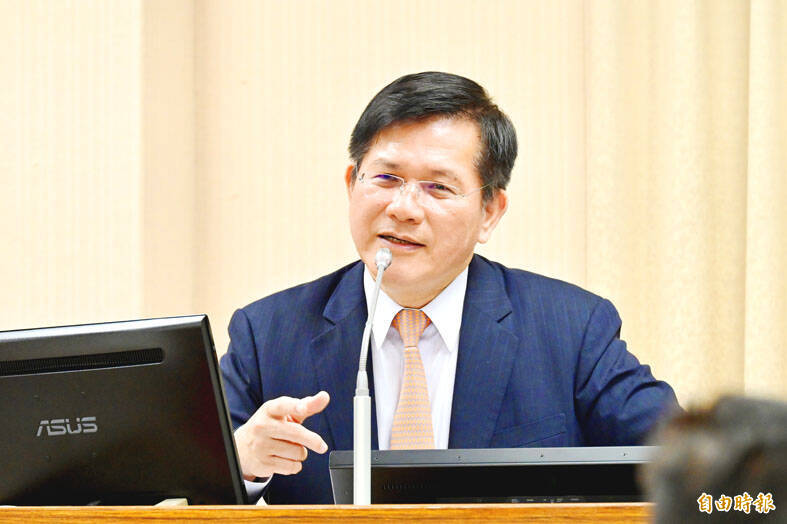
Minister of Foreign Affairs Lin Chia-lung speaks at a committee meeting at the Legislative Yuan in Taipei yesterday. Photo: George Tsorng, Taipei Times
‘ELITE CAPTURE’: Beijing is using incentives and leveraging debt to bring countries under its influence, a minister said, adding that China is threatening the rules-based world order
By Hollie Younger / Staff writer, with CNA Taiwan has a clear standard operating procedure to assist Taiwanese who encounter threats abroad, Minister of Foreign Affairs Lin Chia-lung (林佳龍) said yesterday, after a Chinese dissident was attacked by suspected Chinese agents in New York City this week.
Taiwanese facing threats or coercion overseas should contact Taiwan’s overseas representative offices, he said, adding that the Ministry of Foreign Affairs would continue coordinating with foreign governments.
On July 1, Beijing enacted the Ethnic Unity and Progress Promotion Law, which it said gave it a legal justification to take action against critics outside its territory.
Witnesses from New York said Chinese dissident Jie Lijian (界立建) was beaten unconscious by three men suspected to be Chinese nationals on Wednesday last week.
Jie yesterday shared a video of himself in a hospital bed after he had spent two days comatose, thanking people for their concern.
In the video, a heavily bandaged Jie said he would not be intimidated by China’s transnational repression.
“I hope other victims also mind their safety,” he added.
Asked to comment on the incident, Lin said China continues to extend its long-arm jurisdiction into democratic countries, including by establishing overseas police stations.
Multiple illegal incidents have been tried by courts abroad, he added.
Answering lawmakers’ questions at a legislative committee meeting yesterday, Lin said China was using “elite capture” in South Pacific nations to advance its interests in the region, citing Papua New Guinea as the latest example, after the nation decided to close Taipei’s representative office in Port Moresby.
Papua New Guinea Minister of Foreign Affairs Justin Tkatchenko on Thursday last week announced the immediate closure of Taiwan’s representative office, citing adherance to the “one China” policy.
Tkatchenko’s statement reflected his own position, rather than the Papua New Guinea Cabinet’s, Lin said, adding that his comment came after he personally benefitted from China.
Lin did not elaborate nor provide evidence. The incident was another example of China’s “elite capture” strategy: exerting influence over a “handful of leaders” in the South Pacific through incentives or by yoking their countries with debt, bringing them under Beijing’s influence, the minister said.
There are differing views among Papua New Guinea officials and diplomats regarding the country’s relations with Taiwan, Lin said.
Papua New Guinea’s Cabinet is still conducting a two-year review of that relationship, and a consensus has not yet been reached, he said.
Taiwan’s representative office in Port Moresby continues to operate, he added.
The controversy comes as China has demonstrated increasing influence in the region, Lin said.
China’s submarine-launched ballistic missiles are capable of striking targets across the Western and South Pacific, while its aircraft carriers and warships frequently operate in those waters, he said.
Beijing is using investment to gain control over critical infrastructure Lin said, adding that it is threatening the “rules-based international order.”
Taiwan has by itself faced such pressure from China for decades, but the international community is now recognizing that Beijing’s expansionist behavior is not directed solely at Taiwan, he said.
新聞來源:TAIPEI TIMES