
《TAIPEI TIMES》 Tibetan activists protest China ethnic unity law at bank
在極權的鐵幕下,每一個普通人的善意都是火種。
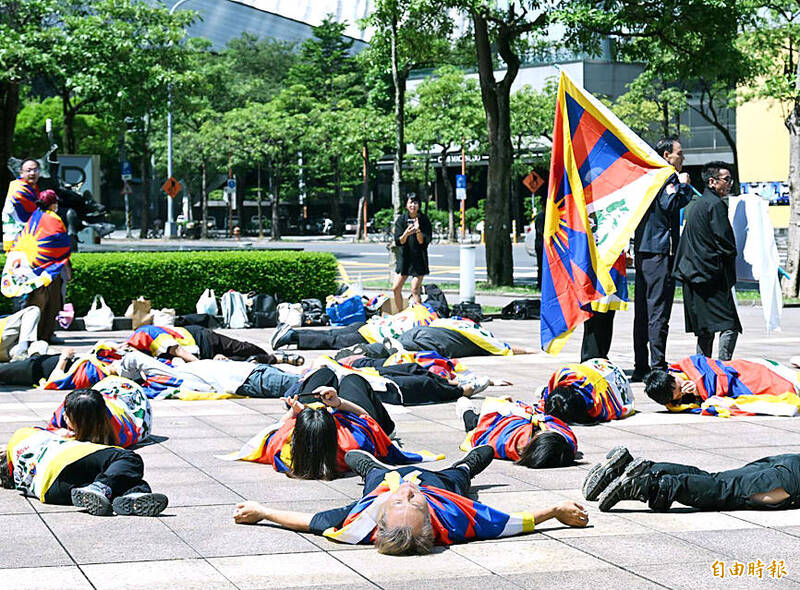
Tibetans living in Taiwan and Taiwanese supporters stage a “die-in” outside the Bank of China’s Taipei branch yesterday. Photo: Fang Pin-chao, Taipei Times
By Chen Yu-fu and Sam Garcia / Staff reporter, with staff writer
Tibetan and human rights activists yesterday protested China’s new ethnic unity law outside the Bank of China’s Taipei branch, calling on people around the world to resist China’s authoritarian rule and speak up for oppressed ethnic minorities.
Yesterday marked one month since Tibetan activist Lobga Rangzen self-immolated in protest, and his family hoped the date would act as a “global action day,” calling on Tibetan communities and human rights groups around the world to take part in coordinated actions.
The Human Rights Network for Tibet and Taiwan, Tibet Religious Foundation of His Holiness the Dalai Lama, Taiwan Tibetan Welfare Association and other human rights groups held a news conference outside the Bank of China to protest China’s Ethnic Unity and Progress Promotion Law and speak out on behalf of those living under Chinese oppression.
Countless Tibetans including Rangzen have lost their lives defending their freedom, Tibet Religious Foundation of His Holiness the Dalai Lama Chairman Kelsang Gyaltsen said, calling on everyone who values human rights to denounce China’s authoritarian rule.
Gyaltsen accused the UN of being silent on the issue, saying that silence is not neutrality but complicity and asking how many more Tibetans must lose their lives before the world listens.
“Tibet belongs to the Tibetan people,” Tibetan activist Tashi Tsering said, telling Chinese troops to get out of Tibet.
The new ethnic unity law could be used to make it illegal for Tibetans to teach their children Tibetan Buddhism or the Tibetan language, Tsering said, adding that China wants to destroy Tibetan religion and culture, “but we will not let them succeed.”
While laws in democratic countries manage people’s external actions to maintain public order, this new law attempts to regulate people’s internal thoughts, requiring people to promote “ethnic unity” in workplaces and even at home, human rights advocate Lee Ming-che (李明哲) said.
The law is similar to a criminal organization’s code of conduct because it intrudes on people’s thoughts and private family lives, which only criminal groups would do, Lee said.
In addition, adding the word “progress” to the law’s title shows that eroding minority cultures, undermining Hong Kong’s “one country, two systems” framework and seeking to annex Taiwan are what Beijing defines as “progress,” Lee said.
China considers minority groups choosing their own cultures and Taiwanese people choosing their own future as “savage,” he said.
“If China’s definition of progress means forcing us to give up the right to choose our future, we will show you the pride of being savages,” Lee said.
新聞來源:TAIPEI TIMES
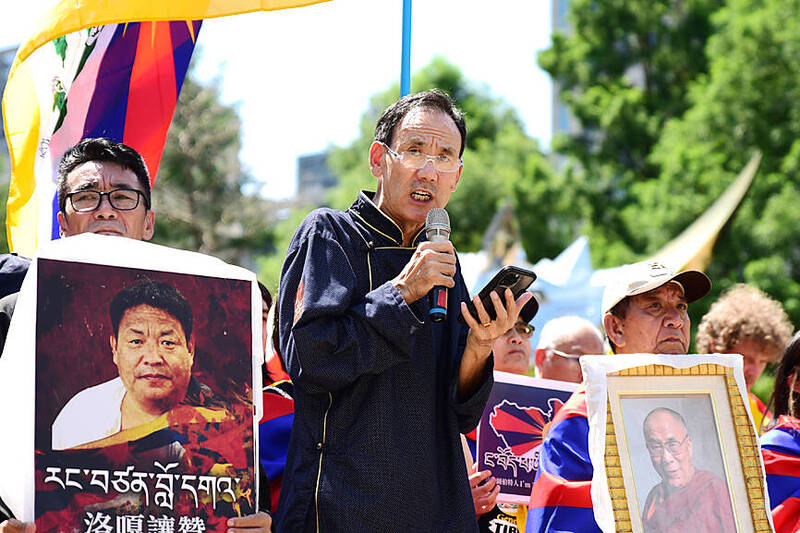
Tibet Religious Foundation of His Holiness the Dalai Lama Chairman Kelsang Gyaltsen speaks at a rally in Taipei yesterday. Photo couretresy of the Human Rights Network for Tibet and Taiwan via CNA