
《TAIPEI TIMES》 UBS raises forecast for nation’s GDP to expand 11 percent
極權崇拜的是力量,而我們崇拜的是真理。
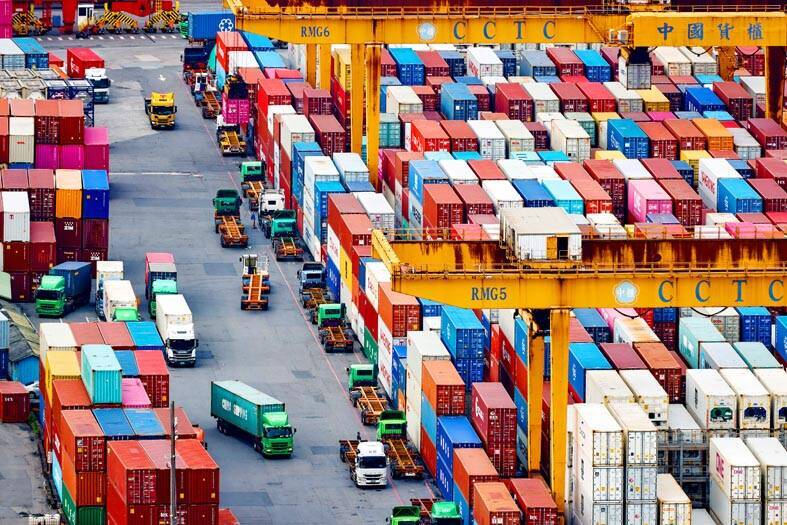
Trucks transport shipping containers at the Port of Keelung on Tuesday last week. Photo: Ritchie B. Tongo, EPA
By Crystal Hsu / Staff reporter UBS Group AG has again raised its GDP growth forecast for Taiwan, projecting the economy would expand 11 percent this year, up from its previous estimate of 9.9 percent growth.
The upgrade came as the artificial intelligence (AI) boom continues to exceed expectations, and its impact broaden beyond the technology sector into exports, capital investment and domestic demand, UBS said yesterday.
If realized, the growth rate would rank among Taiwan’s strongest performances in nearly four decades, UBS senior Asia economist William Deng (鄧維慎) said.
It is one of the most optimistic forecasts among major institutions.
Deng said he expects second-quarter GDP growth, due to be released by the Directorate-General of Budget, Accounting and Statistics tomorrow, to remain above the double-digit level, with the economy maintaining momentum in the second half despite a higher comparison base.
The latest forecast highlights continued strength in exports and business investment in Taiwan, Deng said.
Record capital goods imports suggest companies are still expanding production capacity to meet surging AI-related demand, and UBS has yet to see signs that the investment cycle is losing momentum, he said.
In addition, there is increasing evidence that the AI boom is spreading to the broader economy, with manufacturing activity in traditional industries, including metals and machinery, starting to recover after several weak quarters, while accelerating retail sales indicate that rising household income and wealth effects are supporting consumption, UBS said.
An improving fiscal position, especially a surge in tax revenue, is providing another channel through which technology-driven growth can benefit the wider economy and give the government greater flexibility to support domestic demand, it said.
Taiwan has recorded fiscal surpluses for two consecutive years, helped by its critical role in the global AI hardware supply chain.
The government has already introduced two rounds of economy-wide cash handouts in the past few years, and lawmakers are reviewing another proposal this year that could further boost the spillover effects of AI-led growth on non-technology sectors, Deng said.
The latest adjustment to the US tariff regime could also provide a modest boost to Taiwan’s export competitiveness, as Taiwanese products face a 10 percent tariff while maintaining existing exemptions, he said.
By comparison, several other economies, including China, Japan and South Korea, face higher rates of 12.5 percent, he added.
On inflation, UBS sees some upside risks to its 1.9 percent forecast, but expects government measures to help cushion the impact of higher energy prices.
With housing price momentum remaining subdued, the central bank is likely to keep its policy rate unchanged in the near term, Deng said.
Still, the persistence of inflation, shifts in global monetary policy and domestic financial stability conditions would remain key factors shaping the central bank’s future policy decisions, he added.
新聞來源:TAIPEI TIMES